
For Walter Johnson, Excellence Was Never Optional
Walter Johnson, FOX ’57 has spent his entire life thinking ahead. It’s how he rides his bike through Philly at 90 years old and how he navigated a career as one of only a handful of Black computer systems engineers at IBM Philadelphia in the 1960s. For Walter, being exceptional has been a necessity in a world that rarely allows mistakes.
By Eddy Kosik
A friend offered Walter Johnson, FOX ‘57 a job in 1998 that sounded too good to be true. Two years before the new millennium, a global panic was building around the supposedly impending Y2K crisis, a hypothetical failure of technology rooted in how early computers with limited memory managed dates. If the crisis proved real, the fear was that it could trigger catastrophic disruptions: hospitals, banks and airports all grinding to a halt. Walter’s friend had discovered a program Walter had written 25 years earlier that entirely sidestepped the central problem of Y2K and was prepared to pay Walter an extraordinary amount of money over the coming year and a half to help his company do the same.
Of course, Walter hadn’t written the code in 1973 because he anticipated a millennium-related crisis. He had written it that way because he was very good at his job, and because he understood that the standard approach of representing a calendar year with two digits (1998 as “98,” for example) would eventually cause problems. When the year rolled over to 2000, systems using that format would be unable to distinguish it from 1900. Walter did a bit of extra work, programming his code to internally store four digits for the year. When his friend encountered the program 25 years later, it was still running uninterrupted with a simulated date of 2001, having quietly avoided a problem that would later consume an entire industry.
“Theoretically, that program could run until the year 9999,” Walter explains. “I wrote the code to make sure that if it went past 2000 it would still work. It was a game for me. I never expected the program to last that long, but because I could, I wrote it so that it would run forever, theoretically.” He is quick to dismiss the idea that this reflected any special foresight. “I did it because I hated maintenance,” he says jokingly. “Once I wrote a program and it was done, I didn’t want to touch it again.”
Walter turned down the job offer almost immediately. He had been retired from IBM for six years and didn’t believe the work would be worth the stress, regardless of how much money his friend offered. In fact, he wouldn’t even let him name a higher offer. “With the stress, I could have had a stroke, and I wouldn’t be here,” Walter says. “When you’re writing code that somebody’s livelihood may depend on, there’s a lot of pressure.”
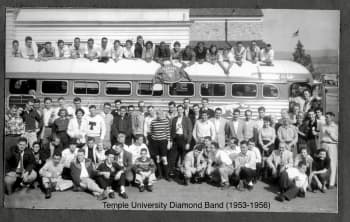
As gifted a programmer as Walter became, his path to the field was not straightforward. Born and raised in West Philadelphia, he had no idea that programming would lay in his future when he enrolled at Temple University. In fact, computer programming was not a course of study until much later. He studied accounting at the School of Business (later to become Fox) because he believed it offered his best chance of finding a job after graduation. (“There were lots of jobs for accountants in the newspaper,” he remembers.) Money had always been tight for Walter’s family. His parents were able to provide tuition for a semester and a half; after that, he paid his own way through school, delivering newspapers on both morning and evening routes until his final semester.
Walter can still name both of his routes down to the exact intersections where they began and ended, how many papers he delivered each shift and precisely how much the routes paid: between $35 and $40 a week. The work could be dangerous — his younger brother was hit by a car and suffered four compound fractures. Walter, however, made it through relatively unscathed.
On the academic front, his heart was not in his studies. Within a year and a half at Temple, Walter realized he didn’t enjoy accounting. When his grandmother accused him of not being smart enough for his classes, he felt compelled to prove her wrong. “I was not a great student,” Walter says. It didn’t help that he felt like a kid compared to most of his classmates who were Korean War veterans attending university in their thirties.
Walter felt isolated from his peers but was fortunate to find community in the concert choir and the Diamond Marching Band, where he played flute and piccolo. “That’s where I found my joy at Temple,” he says. “I felt a part of the music program in a way I didn’t feel a part of the business school.” Struggling to keep up academically often felt like fighting to keep his head above water, but the band and choir welcomed him.
After graduating, Walter worked for two years as an auditor in the City of Philadelphia’s controller’s office before being drafted into the army. His experience with Temple’s band impressed his superiors enough that, after basic training, he spent his entire service playing in an Army band with a special unit at the Continental Army Command (CONARC) in Virginia.
“Temple broadened me,” Walter says. “I probably never went any further than Atlantic City as a kid. Maybe a couple of trips with my grandmother to New York to visit her sister. Other than that, I was a Philly kid. I’d ride my bicycle around West Philly and North and South Philly. That was my life.” Through the choir and band, Walter traveled to Pittsburgh and Chicago, and many other places, experiences that proved formative. He doubts he would have traveled nearly as much had it not been for Temple. “It made me grow a bit quicker than I might have otherwise,” he says. “It gave me a wider perspective, just seeing more than Philadelphia and realizing there’s a lot more out there.”
Upon returning to Philadelphia, Walter returned to his role as an auditor and enrolled in a computer programming course sponsored by the City. At the time, business computers were the size of refrigerators, with up to 16K of memory, but still very much cutting-edge technology for that time. He earned a solid grade and soon transferred to the finance department in their new computer programming unit. After a one-week class at IBM on their 1401 computer, Walter was on his own to teach himself the intricacies of the system. “There was no one in our department who had more than a few months of experience, so there was usually no one to answer questions.” Through self-study Walter became one of the best programmers in the department.
A special Temple video profile on the community band that Walter was a part of, the Night Owls.
“Temple broadened me... It made me grow quite a bit quicker than I might have otherwise. It gave me a wider perspective, just seeing more than Philadelphia and realizing there's a lot more out there."
Walter + Temple Throughout the Years 🦉
Photo Credit: Kia Johnson
Photo Credit: Kia Johnson
Photo Credit: Kia Johnson
Photo Credit: Kia Johnson
Photo Credit: Kia Johnson
Photo Credit: Kia Johnson
Photo Credit: Kia Johnson
Photo Credit: Kia Johnson
Photo Credit: Kia Johnson
Photo Credit: Kia Johnson
A video that Zack James, Walter's nephew, put together for his 90th birthday.
Walter’s supervisor felt so threatened by his strong performance that Walter eventually left the office for IBM’s Philadelphia office. There, Walter was one of just six Black systems engineers, and the only Black systems engineer in the Finance Office. He understood that competence alone would not be enough. He had to be exceptional. “My father always told me if you were Black, you needed to work a little harder to get equal treatment,” he recalls. “You try to make yourself better than the next person, whoever that is.”
Some of his colleagues questioned how he had ended up in the Finance Office. “I later found out it was because I was the 1401 expert, and almost all the banks had 1400-series computers,” Walter says. Most of the recent hires were trained on a newer computer, which meant that Walter’s unique expertise made him indispensable. “I got my fingers into almost every bank in the city in the late ’60s, solving problems. I don’t think there was one for which I didn’t have a decent solution.”
After six years in the Finance Office, Walter was promoted to the Education Center where he taught systems and programming to both IBM and customer programmers. This led to long term assignments in Dallas and Los Angeles and several trips to teach classes in Beijing. Walter also taught the programming language COBOL in the evening for two semesters at Temple University Center City.
Walter continued to travel both for work and for pleasure. He also developed a deep love of biking, which culminated in his participation in Bikecentennial, a 1976 bicycle tour spanning the continental United States. Walter served as an assistant leader and completed the entire 4,250 mile route in eight weeks. Read more about Walter's Bikecentennial journey here.
Walter + Biking Throughout the Years 🚴🏾
Walter participating in Bikecentennial, 1976. Photo taken by Theresa Whelan Leland.
Walter participating in Bikecentennial, 1976. Photo taken by Theresa Whelan Leland.
Walter and friends at the top of the Hoosier Pass between Breckinridge and Fairplay, Colorado during the Bikecentennial, 1976. Photo taken by Theresa Whelan Leland.
Walter and friends at the top of the Hoosier Pass between Breckinridge and Fairplay, Colorado during the Bikecentennial, 1976. Photo taken by Theresa Whelan Leland.
Walter and friends in Crowheart, Wyoming during the Bikecentennial, June 1976. Photo taken by Theresa Whelan Leland.
Walter and friends in Crowheart, Wyoming during the Bikecentennial, June 1976. Photo taken by Theresa Whelan Leland.
Walter at Penn Treaty Park in July 2021. Photo taken by Ilene Hass.
Walter at Penn Treaty Park in July 2021. Photo taken by Ilene Hass.
After retiring from IBM in 1992, Walter began teaching PC applications such as desktop publishing and Excel at the Community College of Philadelphia. He retired from that role in 2006. He also played with the Night Owls, Temple’s campus community band, until the COVID-19 pandemic in 2020. He still plays with the marching band every year during Homecoming & Family Weekend, which he attends with his family, many of whom are proud Owls themselves.
Walter has no plans to bike across the country again, but he can still be spotted riding regularly through Philadelphia, sometimes leading tours with the Bicycle Club of Philadelphia. Just be mindful to follow the rules of the bike lanes when riding with Walter. He is known to reprimand people who are riding dangerously: "They are a hazard to themselves," Walter says, "but more importantly, a danger to other riders in the group."
 Built with Shorthand