

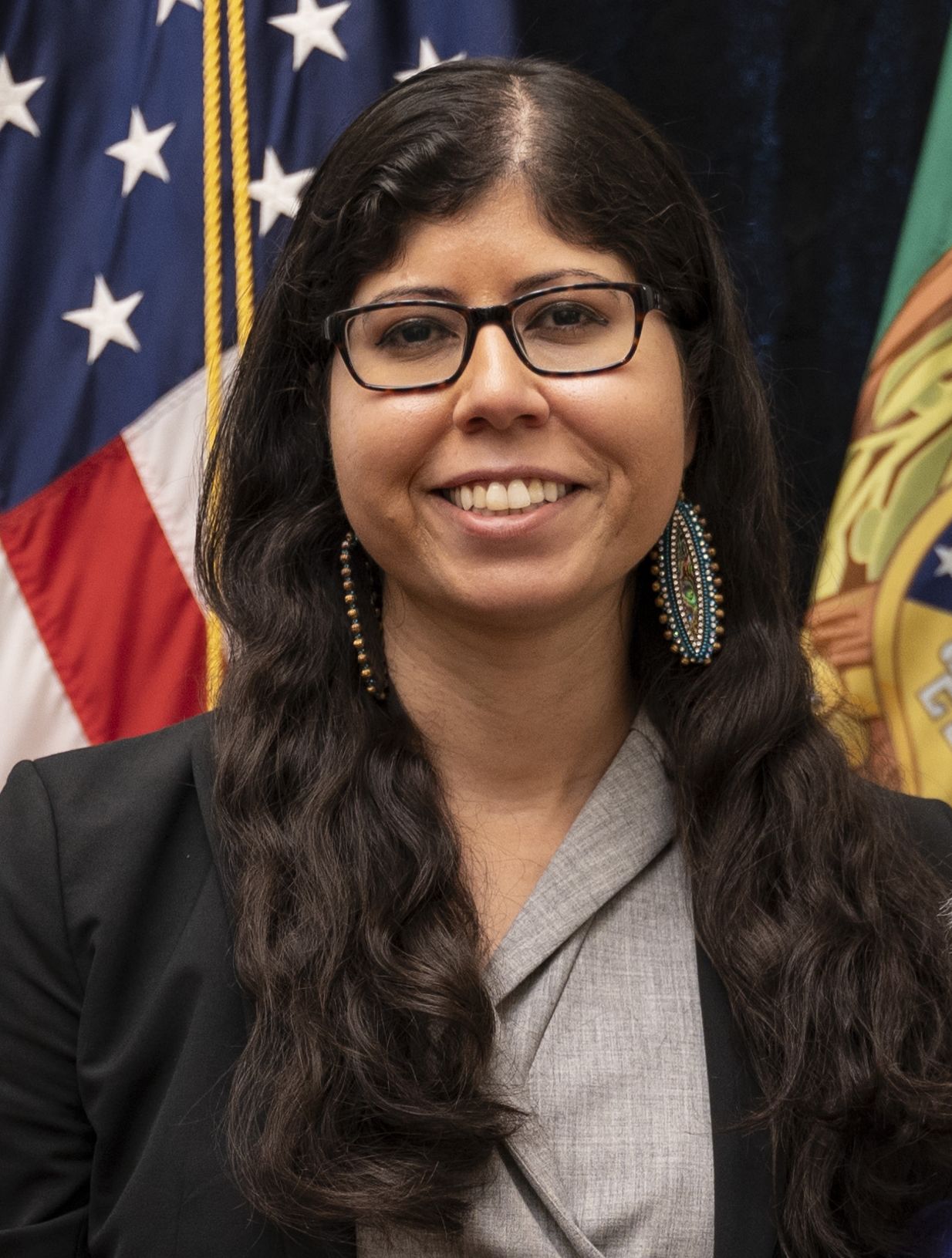
Fatima Abbas Advocates for Tribal Voices in the Halls of Power
As director of tribal and native affairs at the U.S. Department of the Treasury, Fatima Abbas, CLA ’06, works to ensure that Native voices shape federal policy and investment.
By Eddy Kosik
Eight months into the COVID-19 pandemic, Fatima Abbas, CLA ’06, found herself fielding calls from tribal leaders across the United States. From Alaska to Florida, every tribe had urgent needs. Every second mattered. As the newly appointed vice president of government relations for the National Congress of American Indians, she was responsible for representing all 574 federally recognized tribes before the U.S. government. It would have been a difficult task under any circumstance; nevertheless, Fatima assumed her role during an active outbreak that seemed to be infecting and killing Native people at a far greater rate than other communities. In October 2020, when she began her role, the Navajo Nation alone had a higher per-capita infection rate than any state, including New York. It wouldn’t be enough to simply treat the outbreak in these communities—Fatima and her team needed to figure out why the tribes were so vulnerable in the first place.
Research would eventually confirm those fears. In 2023, the APM Research Lab reported that Indigenous Americans had the highest crude mortality rate nationwide. Because the deaths of Indigenous Americans are so often undercounted in the United States, APM noted that this number could have been as much as 34% higher. When Fatima entered her role in the final months of 2020, she knew even less. “[My team] would be in contact with every single tribe,” Fatima explained, “to hear what was occurring in this community, what the needs were.” What they found was conditions predating the pandemic—such as crowded, multigenerational homes that made social distancing difficult, and long-standing problems of underdeveloped infrastructure, poverty and unemployment—helped COVID-19 run rampant in these communities.
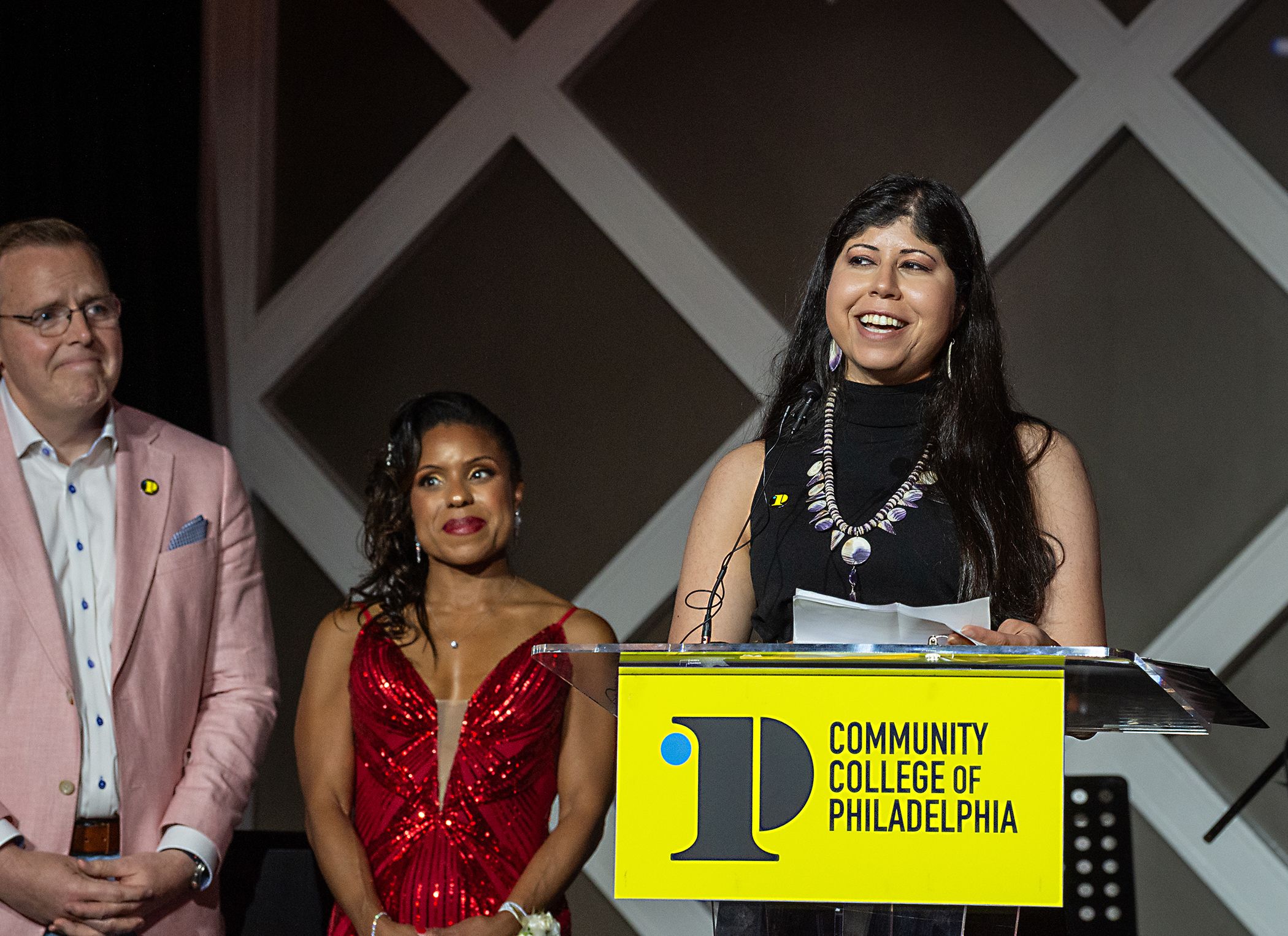
Fatima Abbas received the Alumni Achievement Award at The Community College of Philadelphia's 2025 Black and Gold Gala. Photo taken by Elizabeth Field, courtesy of The Community College of Philadelphia.

Armed with that knowledge, Fatima and her team began to plan their next move. In March 2020, they had helped secure over $12 billion in Tribal pandemic funding, but they knew the need was greater as the pandemic spread. They prepared to ask for at least an additional $22 billion in federal funding, a historic amount of aid to address those underlying conditions in tribal communities. In preparing such a request, Fatima found that she needed to do a fair amount of educating members of Congress who were accustomed to dealing with states rather than tribal governments, which have an entirely different relationship with the government. Tribes also face unique circumstances. For example, the economic losses faced by tribes are different from those of states because tribal governments don’t raise revenue through taxation.
“A lot of my work has been in areas without real precedent, where I’m basically having to create arguments to advance a cause,” Fatima explained. She is used to having to find data that does not yet exist, or to translate for a government that is not familiar with the particulars of the Native community. “We had to come up with other arguments,” Fatima said. “And some of it was as tough as saying that if there have been 50 deaths in a community of only 10,000 people, here’s what those 50 deaths mean. This person was a worker. This person was a caregiver.”
In the end, Fatima and her team secured double their original request: $40 billion. That amount was divided among several departments of the U.S. government, with the largest share going to the Treasury. But once the money arrived there, no one in the department was fluent in the particular economic issues facing tribal governments. In 2022, the Department of the Treasury hired Fatima as the inaugural director of tribal and Native affairs, a role she still holds today.
While Fatima admits to always being drawn to trailblazing work and making difficult decisions, she was not always certain about which route to take with her career. As an undergraduate at Temple, she changed her major multiple times before finally finding her place in geography and urban studies.
“What attracted me [to the major],” she said, “was trying to find solutions to complex problems.” She remembered gentrification being a regular topic of conversation during those classes, a subject that hit close to home for her as someone who grew up in the Feltonville-Olney neighborhood of Philadelphia. “[That neighborhood] was being gentrified. The arguments that we were having were about needing external development, but we didn’t want to push out the people who are from these communities.” She recalled being challenged by her classes and being called out of her comfort zone. “Policy is not black and white,” she remembered learning, but more a matter of learning what she called “the lesser of the ideal.”
Those lessons from her time at Temple are still relevant in her work today. “You know, the ideal for COVID advocacy would have been: ‘I have the data, I don’t have to explain the impact of somebody’s death like that. That should just be understandable.’ You must move beyond that to what is necessary.” When asked if she believes that she possesses particular skills that have helped her find success in her work, she said that she has a knack for being creative with limited resources. At the same time, Fatima finds that the human cost of her work makes it difficult to settle for anything less than success. “When you're working with communities like these, the margins are so close. If you lose the issue for which you’re advocating, there’s a very human impact. If we had not obtained that money, more people would have died.”

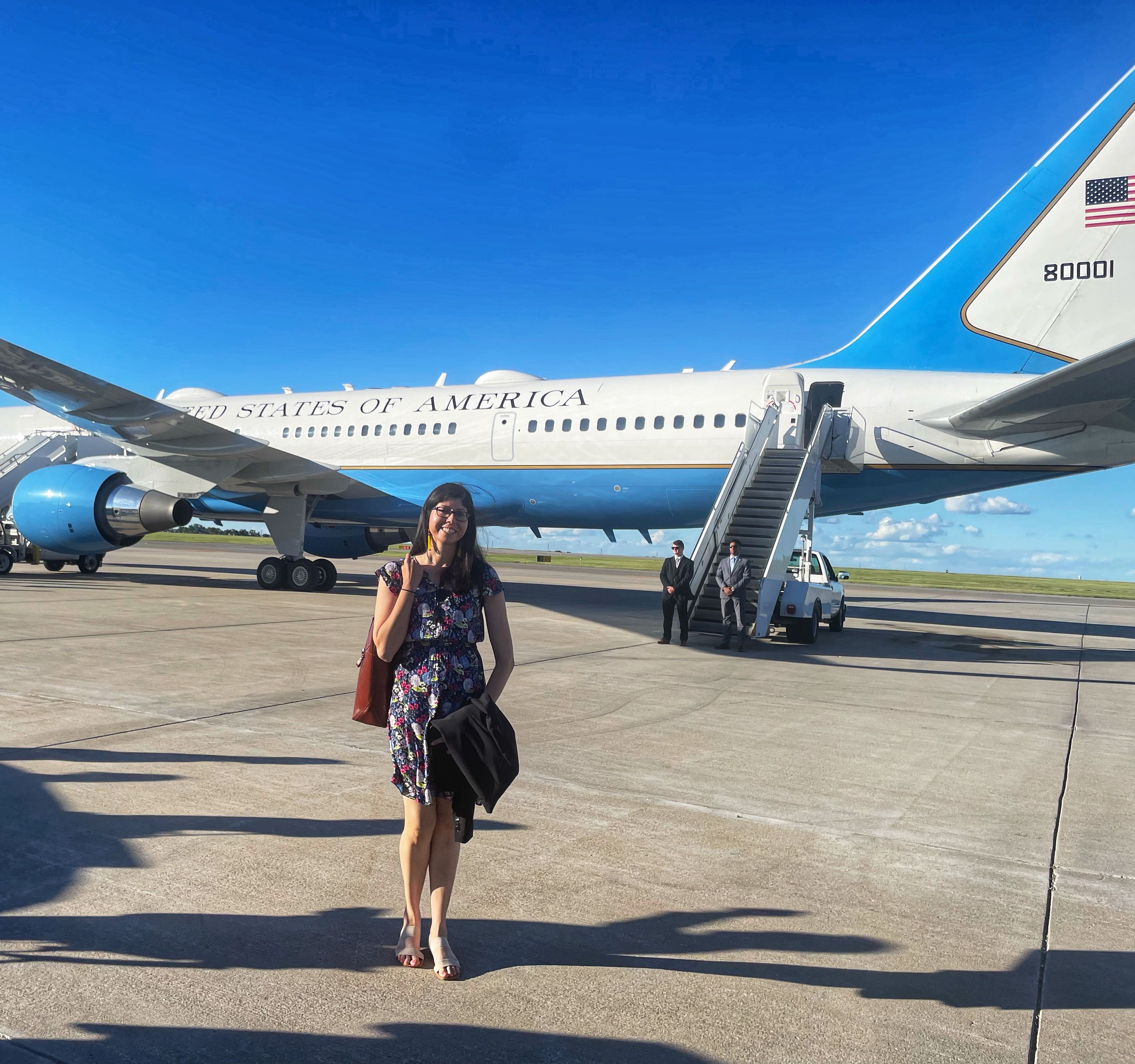
Even today, as director, Fatima said that her work holds a constant flame under her feet. “Tribal communities in the U.S. have some of the highest rates of poverty, upwards of 80% poverty for certain tribes.” She and her team advise on $30 billion in government set-asides to invest in tribal communities across the country. She gives the example of a tribe in Alaska, accessible only by air, without access to broadband internet. That tribe applied for a grant to build digital infrastructure in their community that brought with it access to telehealth and health clinics. Other times, the projects are simpler, such as financing small businesses.
“You’re taking a traditional skill set in that community but trying to help the individuals have a sustainable business that brings employment and creates a tax base. The work that we’re doing, we’re advising on the need and then how to use the tools of business or capital, like banking, to drive an investment into a community that would typically be overlooked because they’re super remote.”
The goal, Fatima explained, is for these investments to be life-altering, to create a foundation the community can continue to build upon. She stressed, however, that the goals are being set by the tribes themselves. Historically, federal policy has been deeply paternalistic, she explained, telling tribes what they need to do. Government policy has been changing for decades with the intent of centering a tribe’s understanding of what’s best for their own community. The government’s role is increasingly that of supporting a tribe’s self-sufficiency.

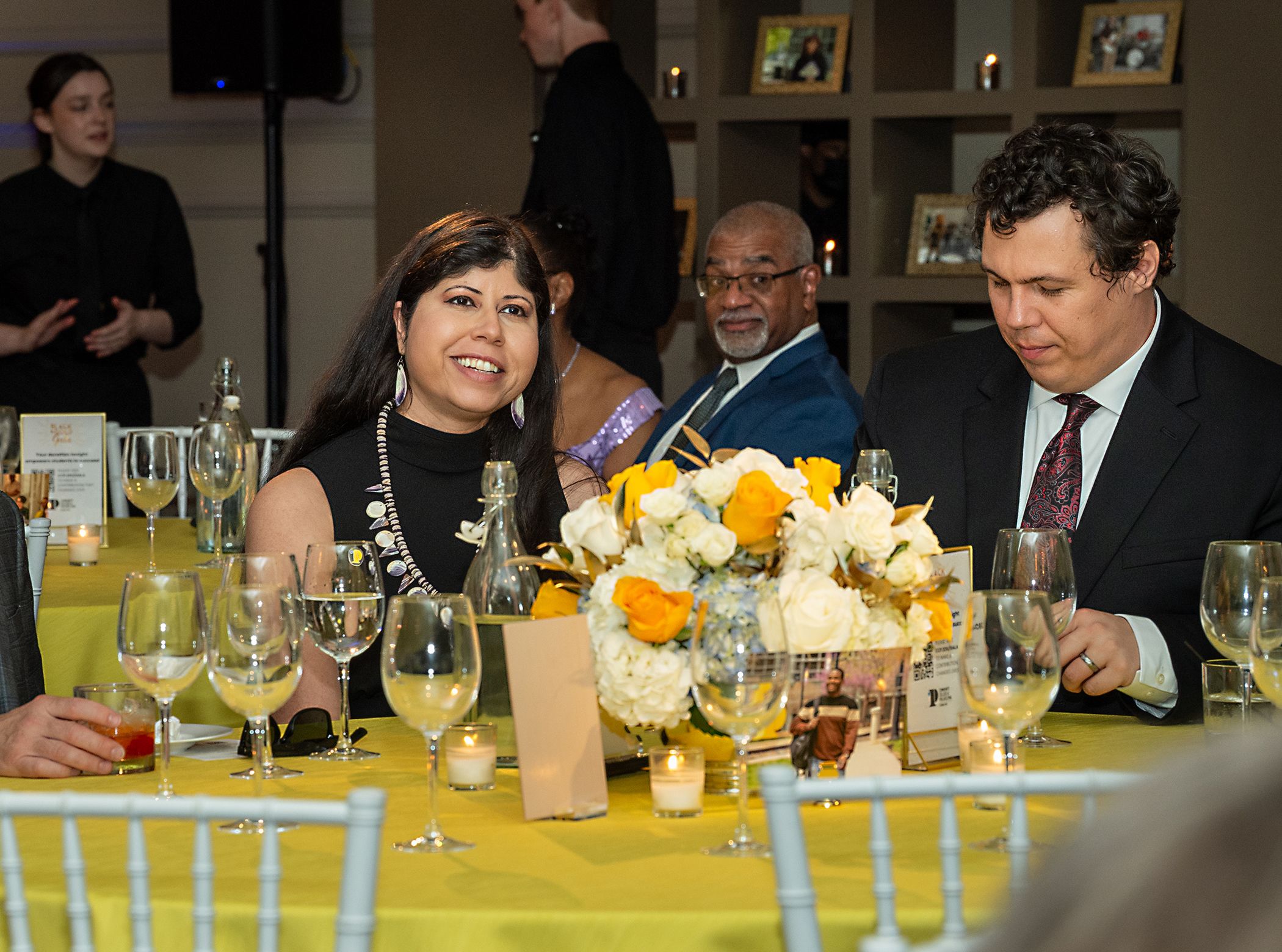
Fatima Abbas at CCP's 2025 Black and Gold Gala. Photo taken by Elizabeth Field, courtesy of The Community College of Philadelphia.
Fatima Abbas at CCP's 2025 Black and Gold Gala. Photo taken by Elizabeth Field, courtesy of The Community College of Philadelphia.

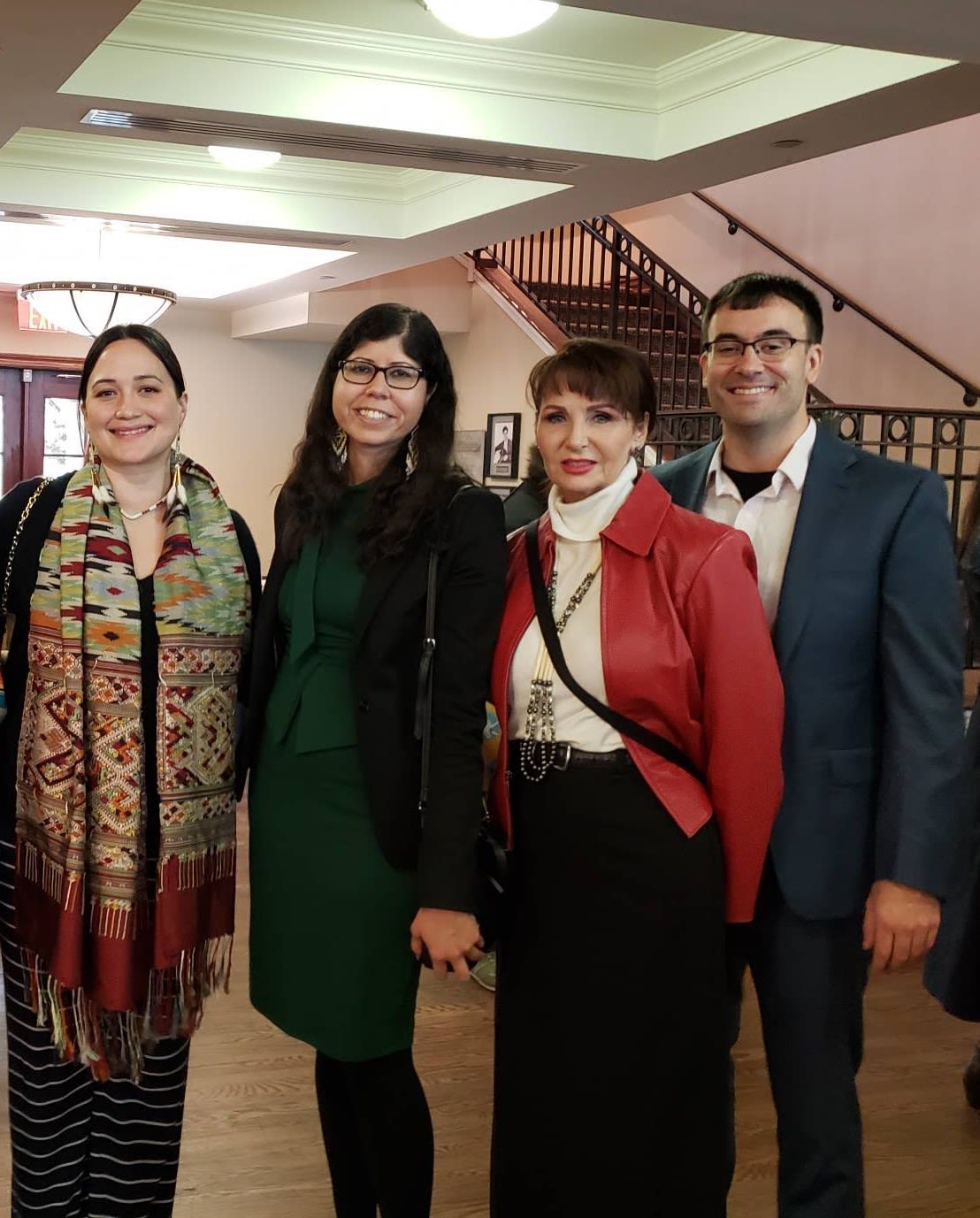
Fatima stands with actor Lily Gladstone (left) and James Colombe, a Policy Advisor in the Office of Tribal & Native Affairs (furthest to the right).
Fatima stands with actor Lily Gladstone (left) and James Colombe, a Policy Advisor in the Office of Tribal & Native Affairs (furthest to the right).
What Fatima appreciates most about this work in the U.S. government is that it has brought her back to the East Coast after years of moving around the United States. While she is no longer in Philadelphia, the city still feels like home. “My friends will attest to this,” Fatima said, laughing. “I constantly reference Philly because I feel like where it’s a city where grit is appreciated.” After graduating from Temple, she went to Berkeley for law school and felt that, by comparison, everyone in the Bay Area seemed concerned with fitting in. “You can’t really fake it in Philly,” she said. “People will call you out on it.”
Temple also feels like home for Fatima. After she graduated, her mother and brother followed her path of obtaining an associate degree at the Community College of Philadelphia (CCP) before earning bachelor’s and master’s degrees from Temple. “Temple and CCP changed our family trajectory,” Fatima said. “We were lower income because my dad’s disabled. My mom was the main breadwinner. All three of us were able to have these excellent careers through the networks that Temple and CCP provided.”
Her advice to students and young people would be to keep an open mind and be willing to pivot. “You might not get what you want,” Fatima said, “and that might be okay. Being able to pivot to other opportunities may open doors you couldn't even think about.” She remembered making assumptions about her peers and her professors, assuming that their lives would be uninteresting or that they had nothing to offer to her. Time and time again, those assumptions were challenged. She recommended finding inspiration from professors and colleagues even if they’re different from you. “Temple’s so diverse,” Fatima said, “and that diversity means you have people with all kinds of experiences.”

 Built with Shorthand