
Chief Adam Waterbear DePaul Knows Where a Story Lives
Adam Waterbear DePaul, CLA '08 wants to assemble the first anthology of Lenape stories, though he'd be the first to tell you that his book is the inferior version. The real stories, he says, live with his community. To hear those, you'll have to sit down and listen.
By Eddy Kosik


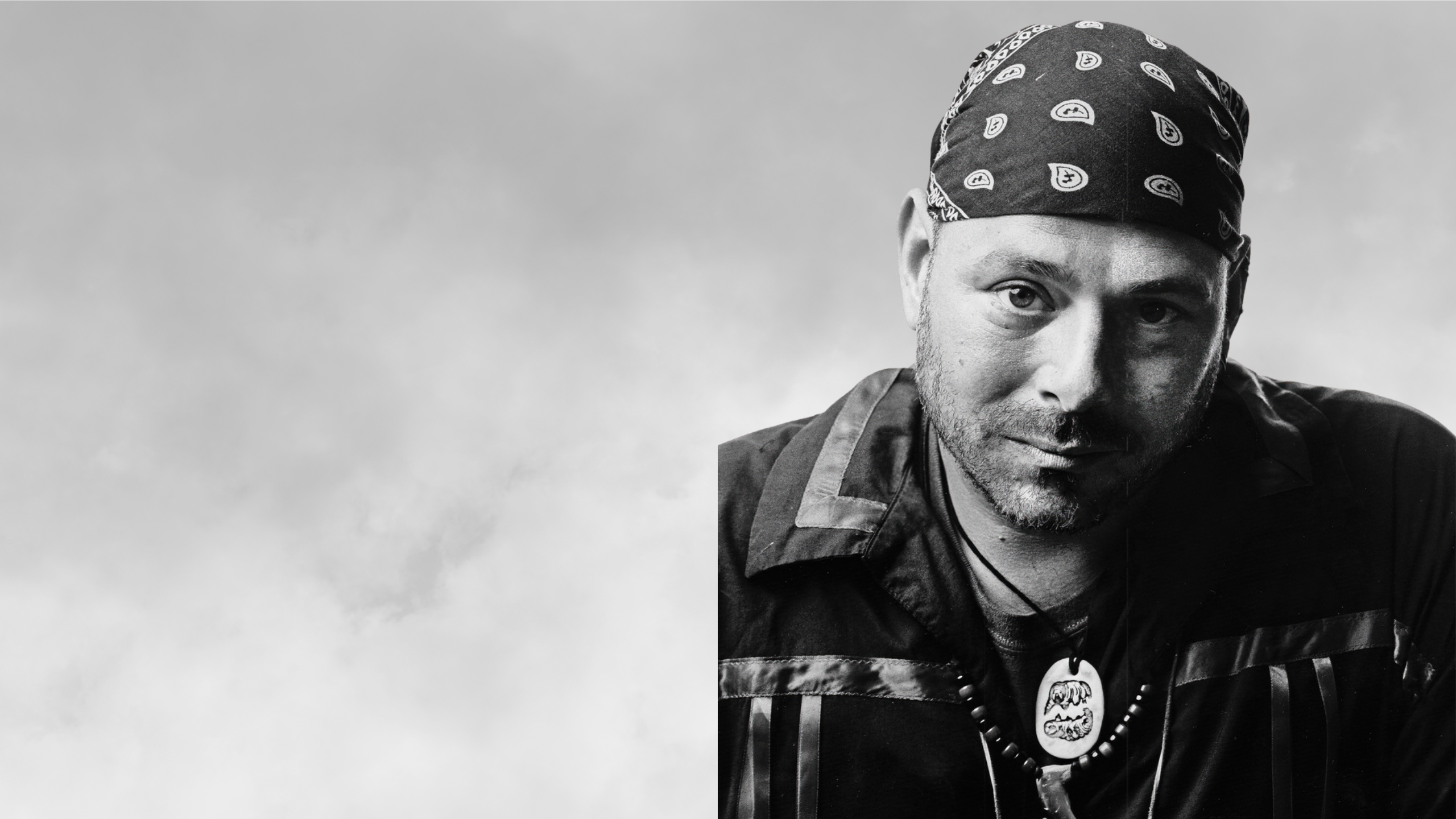
Chief Adam Waterbear DePaul, CLA ’08, counts himself among those lucky few who have always known their passion in life. He is a member of the Lenape Nation of Pennsylvania, those Native people who originally inhabited Lenapehoking, the ancestral land in which Philadelphia sits at the geographical and cultural heart. Adam grew up hearing the stories of his people from his Elders and developed a fascination with world mythology. He studied English and philosophy as an undergraduate student on Temple's Ambler campus, an experience that he has previously described to Temple Now as "the most important time in [his] life."
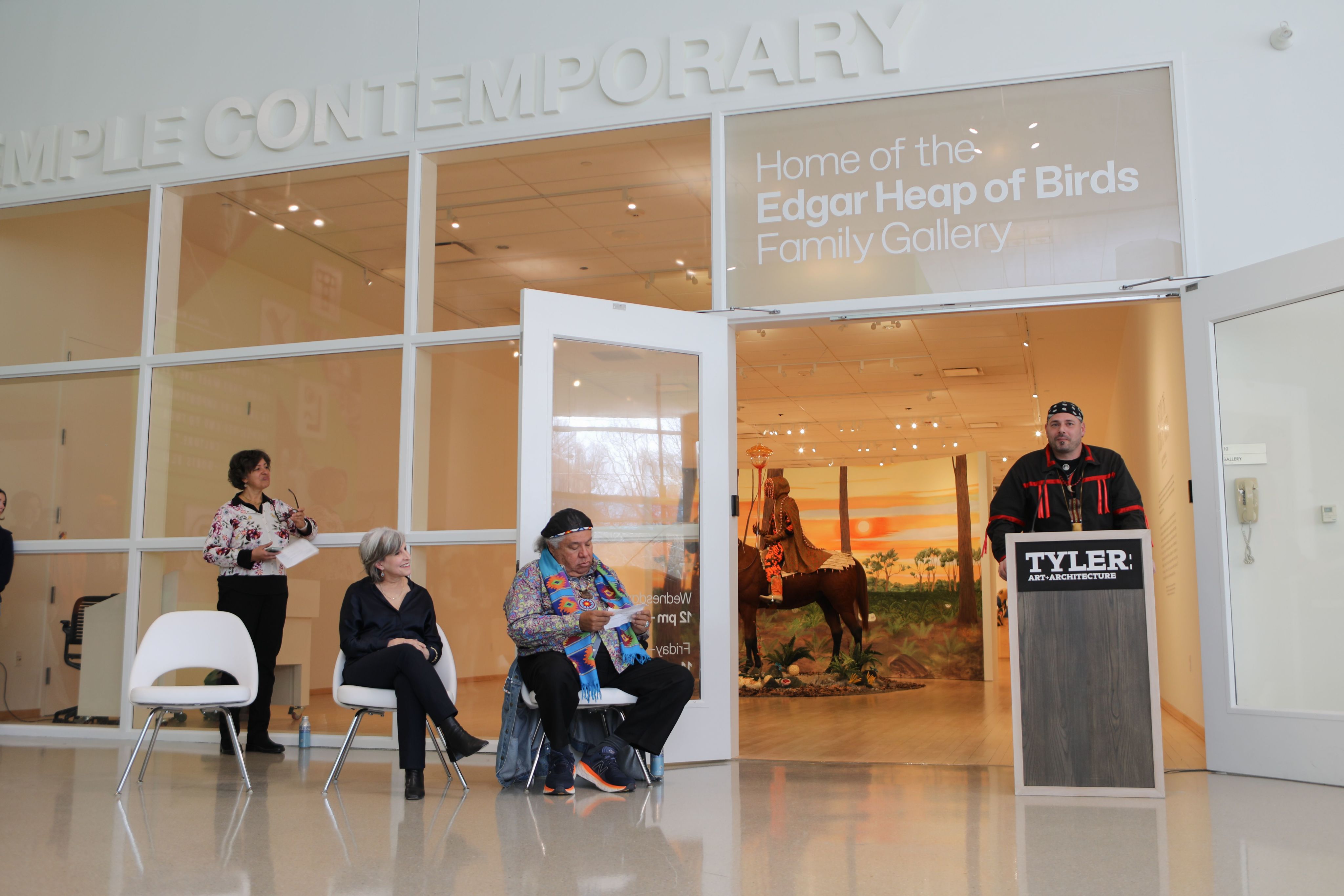
Adam is currently finishing his dissertation on Lenape cultural stories and mythology, an endeavor that is informed by his roles as Chief, director of education and Storykeeper for the Lenape Nation of Pennsylvania. When he spoke to Temple Beyond, Adam was just days removed from hosting the second annual Homecoming: The Lenape Speak conference at Northampton Community College. The gathering had been a dream of Adam’s for years before he launched the conference last year, bringing together Lenape people from across the continent. Last year’s inaugural event sold out months in advance—a sign, Adam says, that the general public is eager to learn about a people whose presence is everywhere, yet whose stories they’re still being told so little about.
The following Q&A has been condensed for clarity and conciseness.

Were you surprised by the popularity of this year’s conference?
I did expect it to be popular, because our programs have been doing really well. We can barely keep up with them. But selling out months in advance was even more than I anticipated. I expected a lot of people to show interest, but again, I think it even exceeded that. What that tells me is that people are hungry for this knowledge, for this experience. People have been living personally, and generationally, with our history all around them, but also our presence. But they’ve learned almost nothing. Our history, our culture, even our presence, have been erased or excluded from history books and education. It is really wonderful to see that if we can give people access to our culture and ourselves, they want to learn.
Something that I didn’t realize until researching for this interview was that Pennsylvania does not recognize the Lenape people. That was mind-boggling to me.
Yeah, it is mind-boggling. That’s probably on the polite side of the spectrum you could call it. Our indigenous homelands, the Lenapehoking, cover four states. Pennsylvania is the only one in our homeland that has never recognized any Indigenous people.
New Jersey has two state-recognized Lenape nations. Delaware has one state-recognized Lenape nation. New York has not recognized any Lenape nations, but they have recognized other tribes that have a larger geographical presence in their region. Pennsylvania has never recognized our people or any other Indigenous people. As far as the state record exists, we’re not here and apparently never have been.

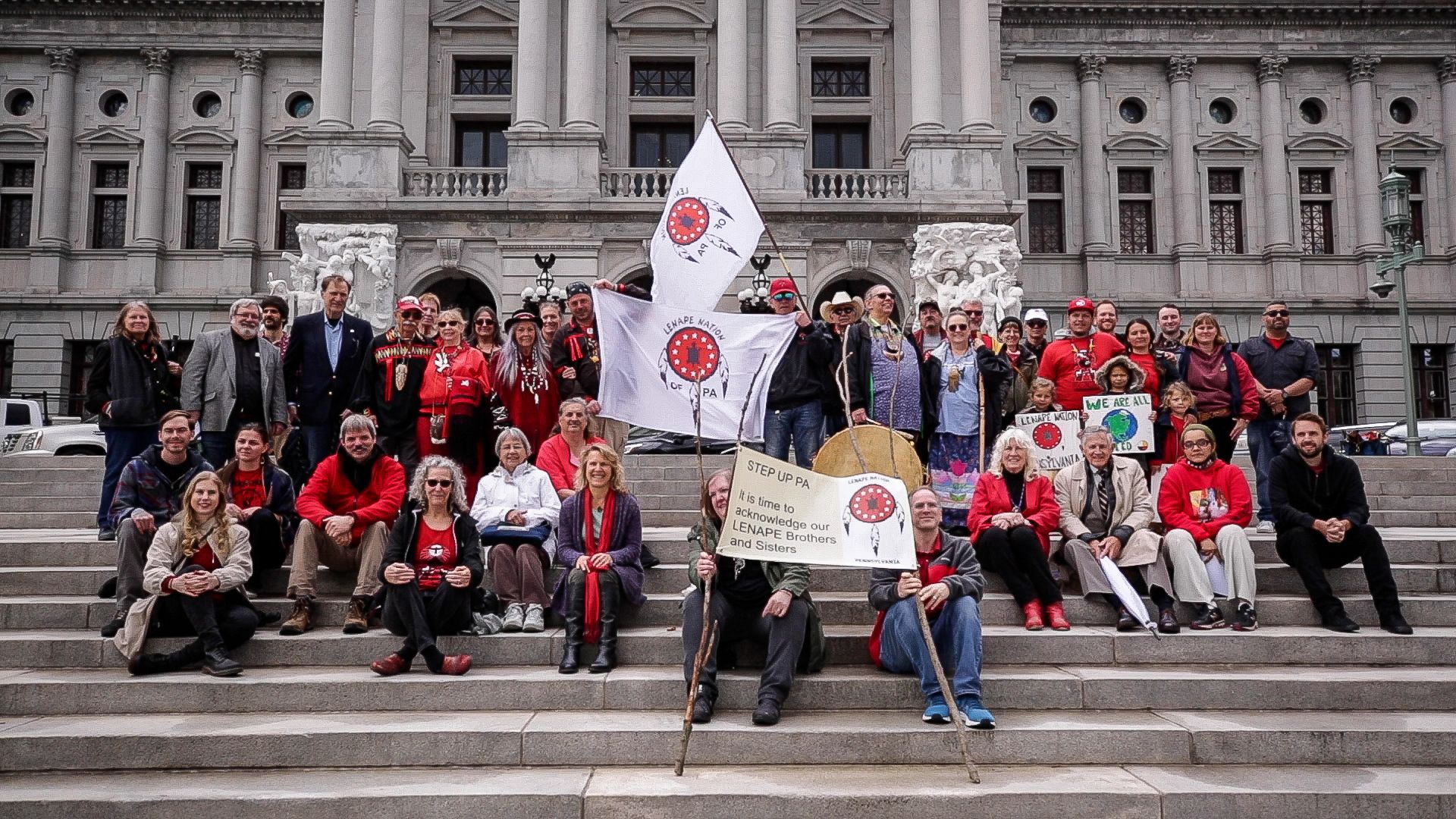
Chief Adam Waterbear DePaul and others at a Lenape Nation of Pennsylvania rally for tribal recognition in Harrisburg, May 2023.
Chief Adam Waterbear DePaul and others at a Lenape Nation of Pennsylvania rally for tribal recognition in Harrisburg, May 2023.
In addition to your role as one of the four Chiefs of the Lenape Nation of Pennsylvania, you’re also director of education for the Nation as well as Storykeeper. Could you talk to me about those roles?
Being a Chief stands alone from my other responsibilities. We keep our precolonial tradition of having multiple chiefs. Sometimes people are surprised by that because they’ve learned, mostly through movies, that there’s one chief for an entire people. That’s never how our people did things.
When Europeans came over, they brought their own ideas of aristocracy where there is one king or person who lords over a whole people. They also found it convenient for making land and trade deals to identify and uplift a single person so if a tribe or a people were unhappy with what was being given away, they could just say, “Well, we spoke to your chief, and he has authority.”
But no, we have four chiefs. Being a chief means two main things: the first, helping guide the nation in decisions that have to be made. The chiefs are part of tribal council, but it’s not just the chiefs. We have Clan Mothers and a couple other members of council too. We get together at council meetings and make decisions when necessary to guide the nation with our people in mind. Of course, everything we do is to support our people.
The second, on a more personal level, our chiefs are here for support and guidance of our members. So whether someone would like to know more about who we are, or if they’d like to get more involved, or if someone is dealing with a problem like flooding from a storm—we’re literally here for our people on a one-on-one basis too.
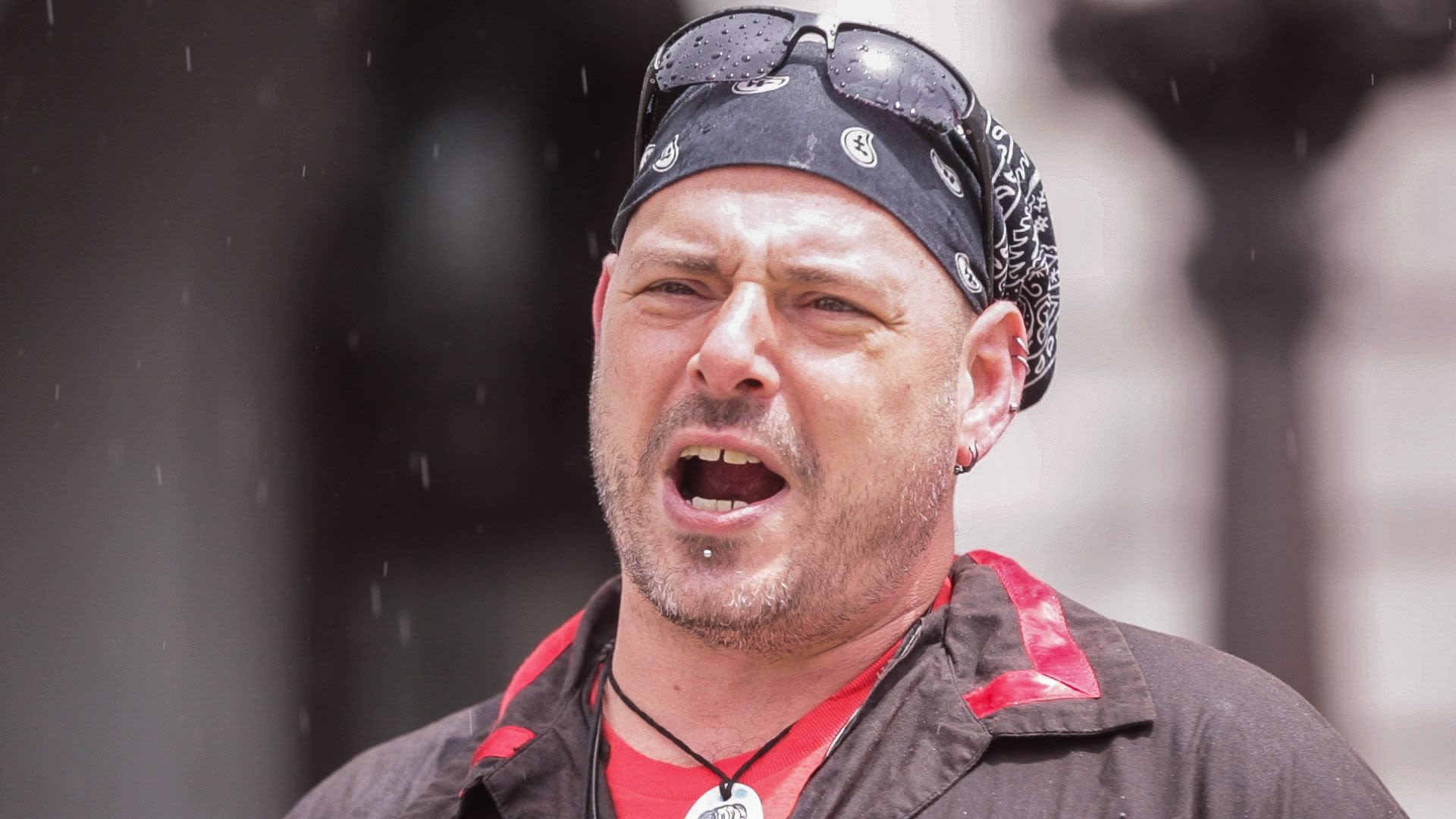
Chief Adam Waterbear DePaul spoke at a Lenape Nation of Pennsylvania rally for tribal recognition in Harrisburg, May 2023.
Chief Adam Waterbear DePaul spoke at a Lenape Nation of Pennsylvania rally for tribal recognition in Harrisburg, May 2023.
As director of education, I work with pretty much any kind of educational program. My focus has been to network with continuing education, as in colleges and universities. I work with over 30 colleges throughout the Lenapehoking, as well as others across the country and a few overseas. I also do a lot of work with curriculum development, land acknowledgments, helping colleges build authentic reading sections in their libraries about our people.
Being a Storykeeper, that is my passion. A lot of people hear “storykeeper” and think “storyteller.” I’m often introduced as the “chief storyteller of the nation,” and that is not true. Being a Storykeeper is very different. Many of our people are wonderful storytellers. Many of our Elders are the ones from whom I came up hearing and absorbing that craft. I’m certainly not the principal storyteller of our nation.
As Storykeeper, my charge is to be a repository for our cultural stories. This involves a split approach. First and foremost: attending ceremonies, events, community happenings; listening to my Elders, hearing these stories firsthand, remembering and absorbing them.
The second approach is academic research. This is where Temple comes in. I’m currently finishing my dissertation on Lenape mythology. Right now I'm doing it on my own time.
That allows me to bring in glimpses of stories through colonial, ethnographic and linguistic sources. Sometimes I’m even able to bring back stories that my Elders haven’t heard before. I can go down that rabbit hole and excavate those stories.

Could you say more about your research?
I really want to produce an anthology of our stories. Of course, for anyone to read, but first and foremost, with our people. Right now, there’s nothing like that out there. There is only a handful of books with Lenape stories in them, maybe three to five. Those are wonderful resources, but some of them might only have seven stories. Some of them are difficult to access in the way that they are presented unless you are an academic.
I would imagine that oral storytelling is a big part of the Lenape storytelling tradition, whereas academic writing is fixed in print. Is that an obstacle in your research?
Oh, it is difficult. Our stories are not meant to be read. They never were. Our people never had a written language. It was European missionaries who came over, heard us talking, and then made a written language with their own letters for the purposes of creating and circulating religious documents to bring us into the church. So never have we had a history of reading our stories.
The process of storytelling is personal, a direct communication between people. Now that could be one person or 100 people sitting down at a ceremony. You’re talking to the people in front of you and you’re all participating in that experience. Stories change. They evolve every time you tell them. You never hear the same story twice from the storyteller, even if the words are almost exactly the same.
The problem with writing stories down is that they become artifacts. Particularly in academia, we worship those artifacts. It’s great if you can go to a conference and hear someone speak, but what really matters are those published papers, those citable resources. Those are what establish value, particularly in academia. That being the case, the written and the published story actually overshadows and dominates the storykeeper, the storyteller.
If I tell a story and someone writes it down and publishes it in a journal, and then someone goes to an event and hears a Chief tell a story, there’s a difference there. And the common response is: “He didn’t tell that story right! I have the real story right here.” Really all they have is just a snapshot of that story’s life at that particular time in that particular circumstance.
So it is difficult; however, it’s absolutely integral to the survival of our culture. We have to write these things down. I’m not at all saying that we shouldn’t. I mean, again, I’m doing a whole dissertation on writing down these stories and planning a book. The record-keeping has to happen, but it has to come along with explicit understanding that these are records of events in time and place. These are not authoritative documents that overshadow a people, a culture.
In the foreword to my dissertation, I actually have a direct address, to that effect, that speaks to our people: “If you’re a Lenape person who stumbled upon this dissertation, and you’re coming here to learn our stories—put this down and go talk to your community. Go talk to your Elders. This is not the way for our people to learn our stories. This is for academic study.”

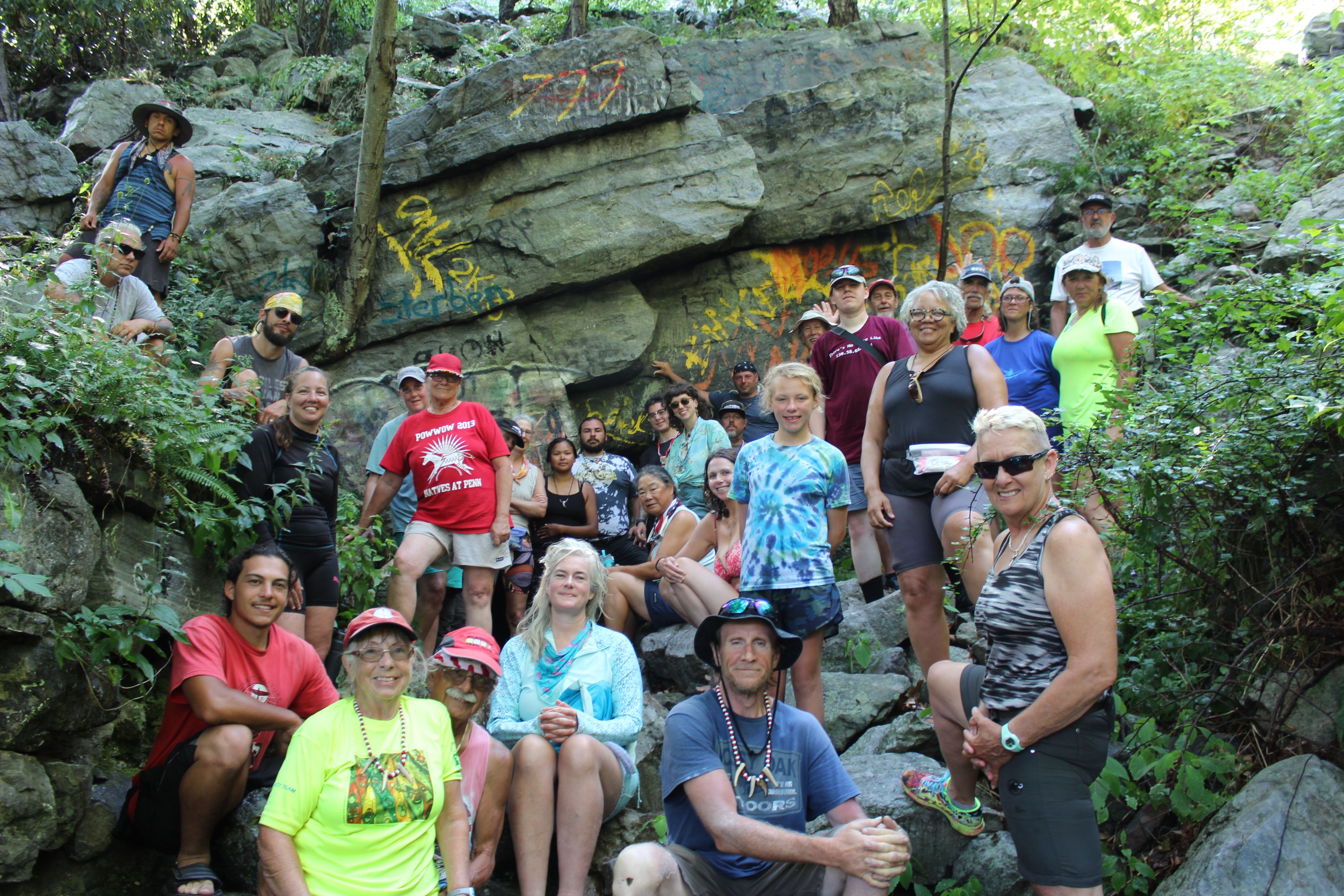
Participants in the 2022 Rising Nation River Journey at Cold Air Cave in Pennsylvania. The Rising Nation River Journey is a three-week canoe journey down the Delaware River from Hancock, NY to Cape May, NJ that takes place every four years.
Participants in the 2022 Rising Nation River Journey at Cold Air Cave in Pennsylvania. The Rising Nation River Journey is a three-week canoe journey down the Delaware River from Hancock, NY to Cape May, NJ that takes place every four years.
What was that moment when your academic and cultural paths started to intersect?
I’m one of those few people who was lucky enough to have a passion early in life and follow it all the way through. During my undergrad, I double-majored in English and philosophy, with a minor in psychology, and absolutely each of those were feeding my interest and my passion and my ability to interact with mythology and cultural stories.
At that point in my life, there was no connection between my cultural life and my academic life. That would come much later in my doctoral program. I never would have thought I’d be addressing Lenape topics at any point in my college career.
I had two moments, both with incredible professors. The first was with Dr. Paul Garrett in the Anthropology Department. The second was with Dr. Eli Goldblatt in the English Department who is now retired. Both of those professors, in the most respectful way possible, they pretty much insisted that I bring my culture into the classroom. They said it was too valuable to leave out, so needed in the area. They created every space available for it. Dr. Paul Garrett would go on to serve on my dissertation committee. They just paved the way, and dangled the carrot, for me to bring my Lenape culture and heritage into my academic studies.
Once I did, everything clicked for me. I’ll never be able to say enough how thankful I am for their guidance. Before that, I was guarded. You know, this is my personal cultural life, and that’s my academic life, and I really don’t mix the two. But having the opportunity to do that, it brought all of that fracturing together. I’m happy and at peace now that I can do that.
Do you have a sense of what that reluctance to bring those together was?
Let’s just call it what it is: the relationship between academia and Indigenous peoples has not always been great. That spans everything from outright abuse and misappropriation of people’s culture and stories and misrepresentation, to more nuanced things like bringing Native culture into the classroom without involving any Native people.
I love academia, but there’s a history of it being harmful to Indigenous people. When you write academic papers, you have to follow the rules of academia. So whether it was through someone else or through me, I didn’t want to expose my culture to academia and then see it artifactualized, analyzed, removed from its people and just commodified.

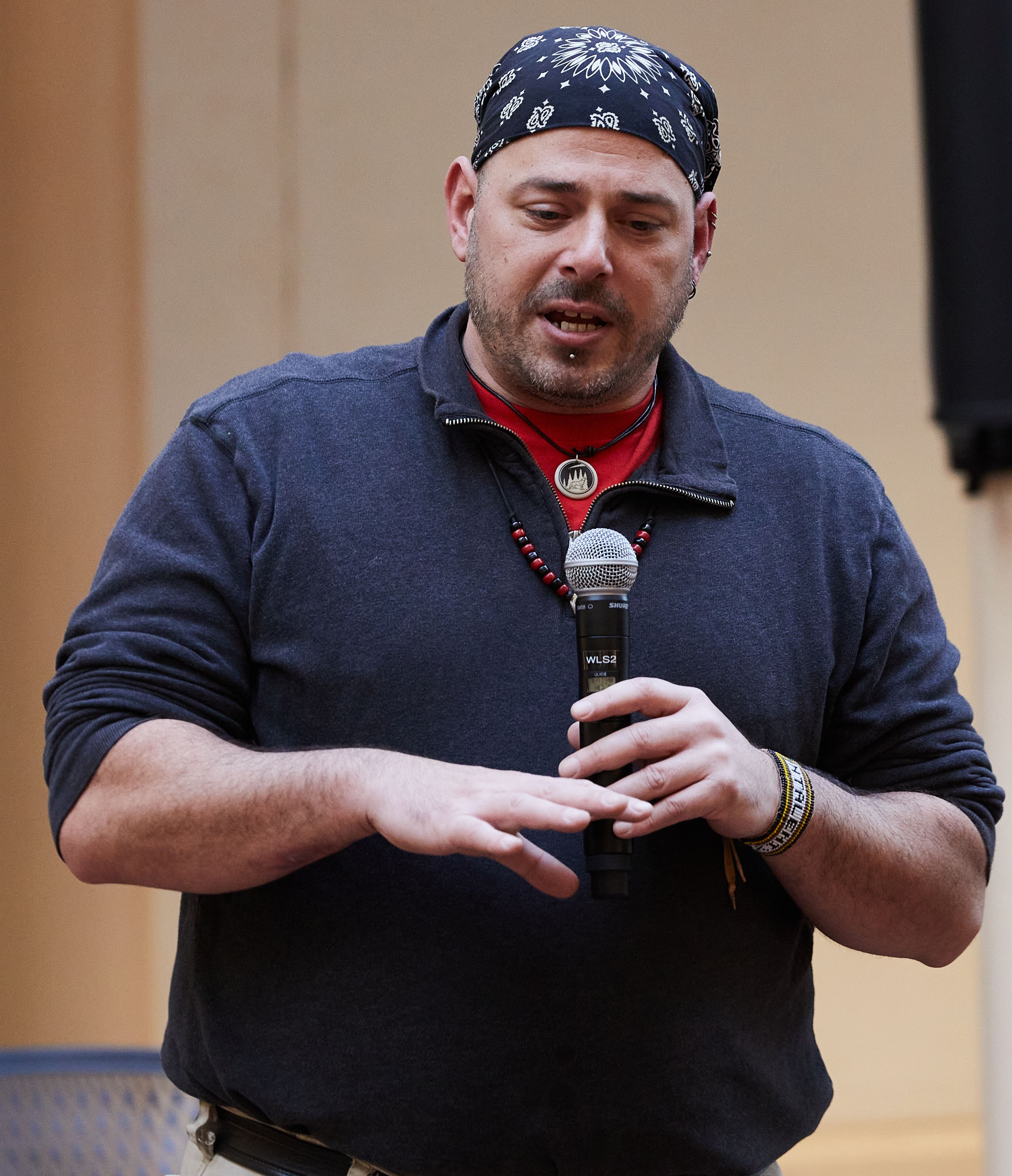
Adam at a Lenape event at the University of Arts in 2022.
Adam at a Lenape event at the University of Arts in 2022.
But in addition to Paul and Eli giving me that invitation, they themselves were just incredible people. They were incredibly committed to sensitivity and cultural awareness and reciprocity. They not only gave me the opportunity—and I’m glad you asked this because this is important—they didn’t just give me the opportunity to bring my culture in; they gave me the confidence that, as long as I was working with the right people, it could be done in a good way that could be beneficial to both academia and to the Lenape people.
The last line of that conference paper I told you about, after I spend 20 pages bringing up problems of how academia can go wrong with Indigenous stories, I end by saying: “I don’t have any answers for this question. I can’t give you a bullet list of how to avoid these problems. But I would be happy to talk about them.” That’s what needs to happen: inclusion of and conversation with the people of the culture. And again, this isn’t limited to Native Americans; it’s the same with any Indigenous people. That’s where the answer starts: with inclusion and permission.

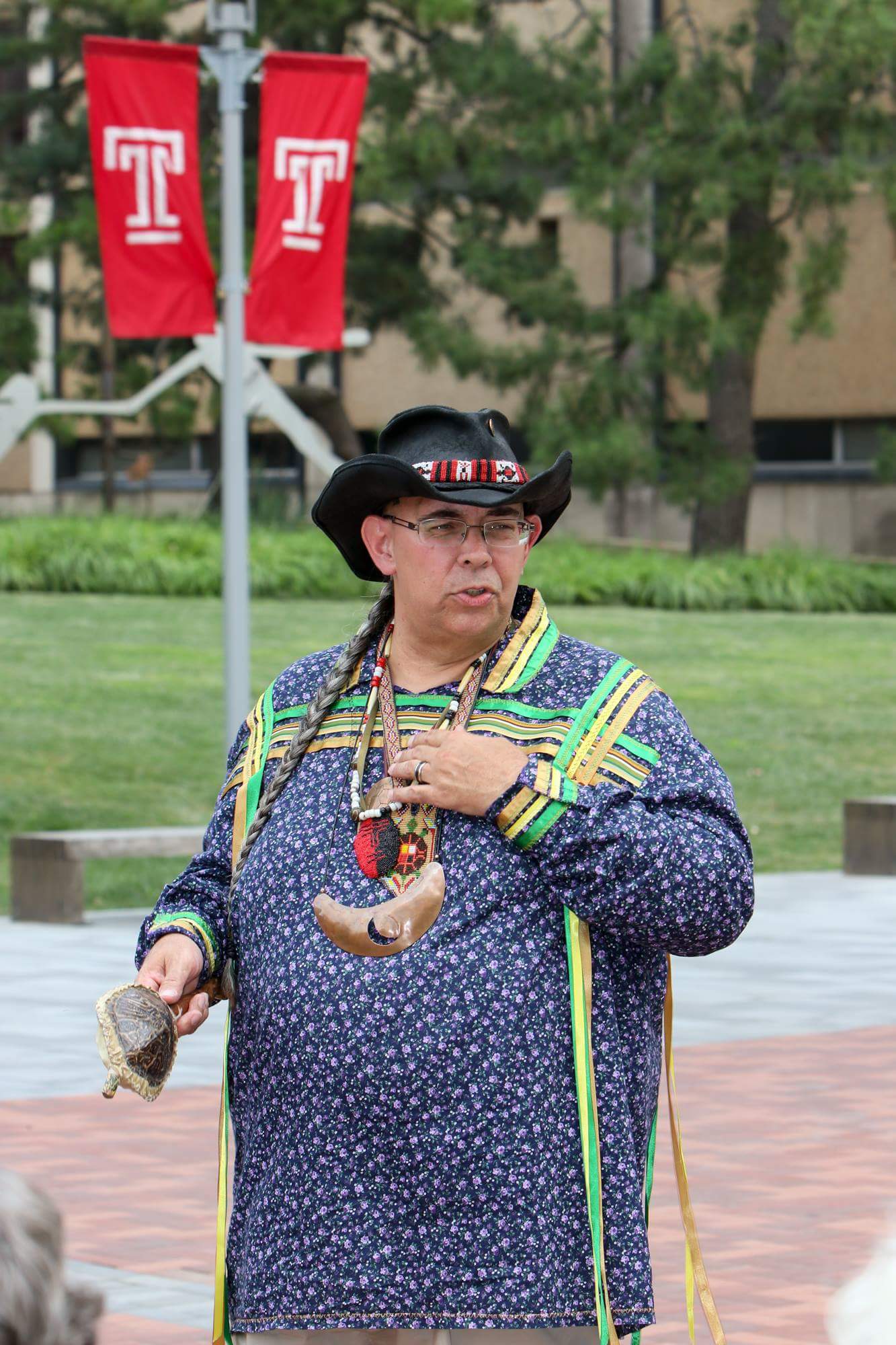
Photos from the signing of the Treaty of Renewed Friendship on Temple's campus during the 2018 Rising Nation River Journey.
Photos from the signing of the Treaty of Renewed Friendship on Temple's campus during the 2018 Rising Nation River Journey.

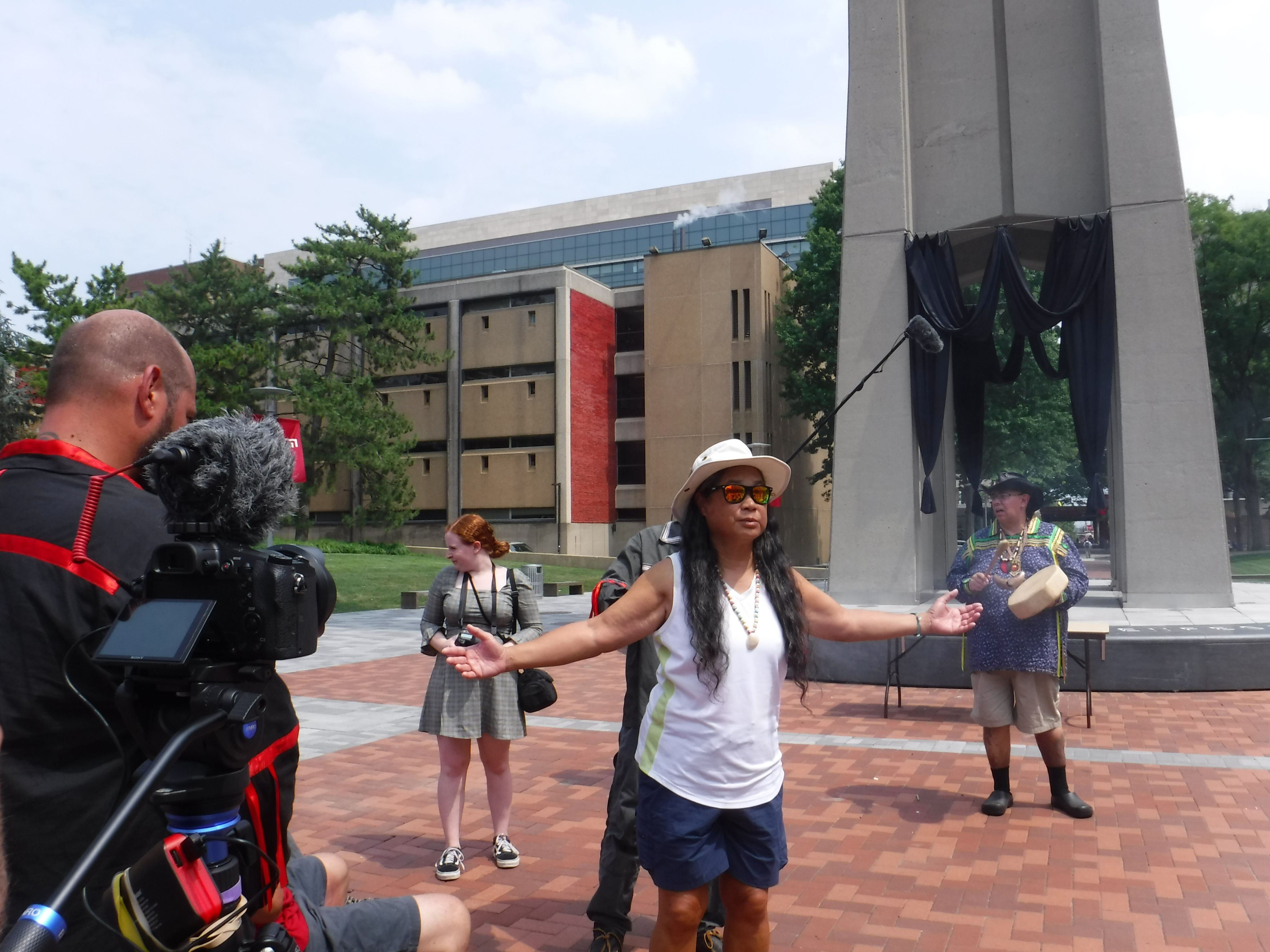
Photos from the signing of the Treaty of Renewed Friendship on Temple's campus during the 2018 Rising Nation River Journey.
Photos from the signing of the Treaty of Renewed Friendship on Temple's campus during the 2018 Rising Nation River Journey.
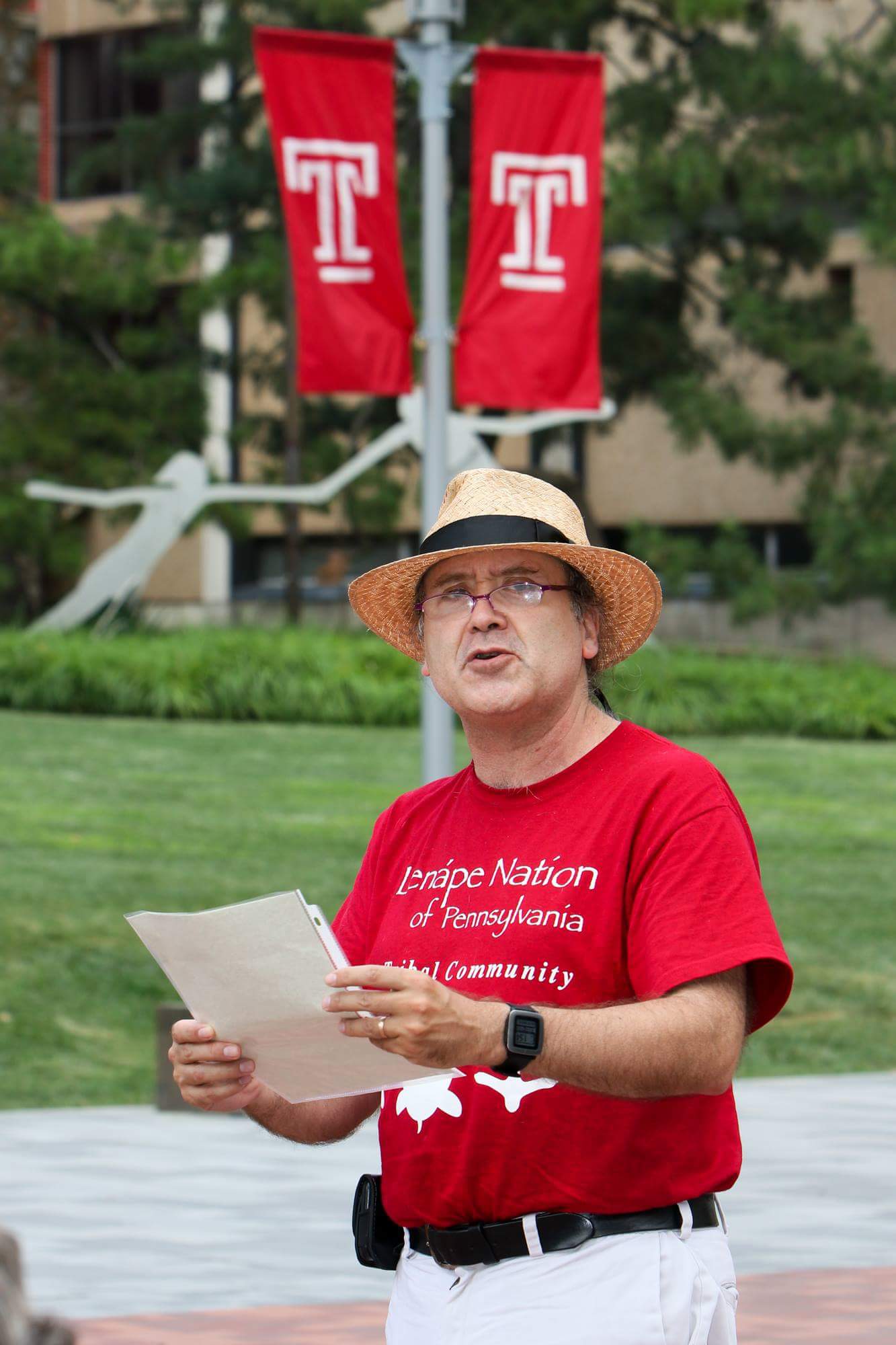
Photos from the signing of the Treaty of Renewed Friendship on Temple's campus during the 2018 Rising Nation River Journey.
Photos from the signing of the Treaty of Renewed Friendship on Temple's campus during the 2018 Rising Nation River Journey.

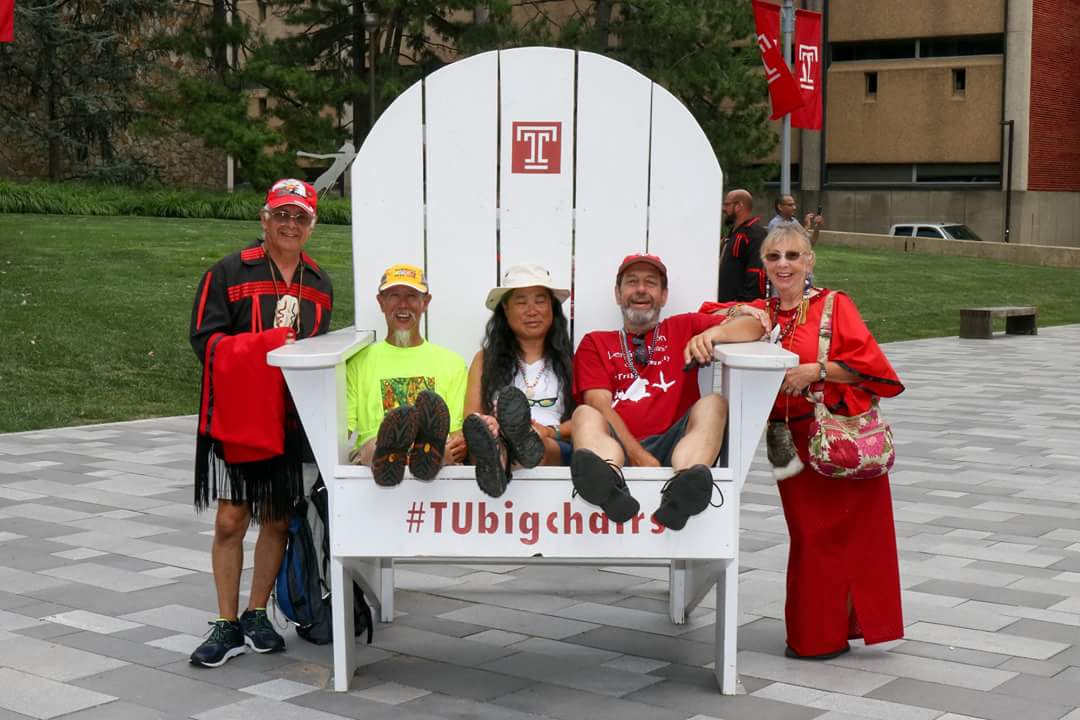
Photos from the signing of the Treaty of Renewed Friendship on Temple's campus during the 2018 Rising Nation River Journey.
Photos from the signing of the Treaty of Renewed Friendship on Temple's campus during the 2018 Rising Nation River Journey.
If someone does have that hunger to engage with Lenape culture, where should they start?
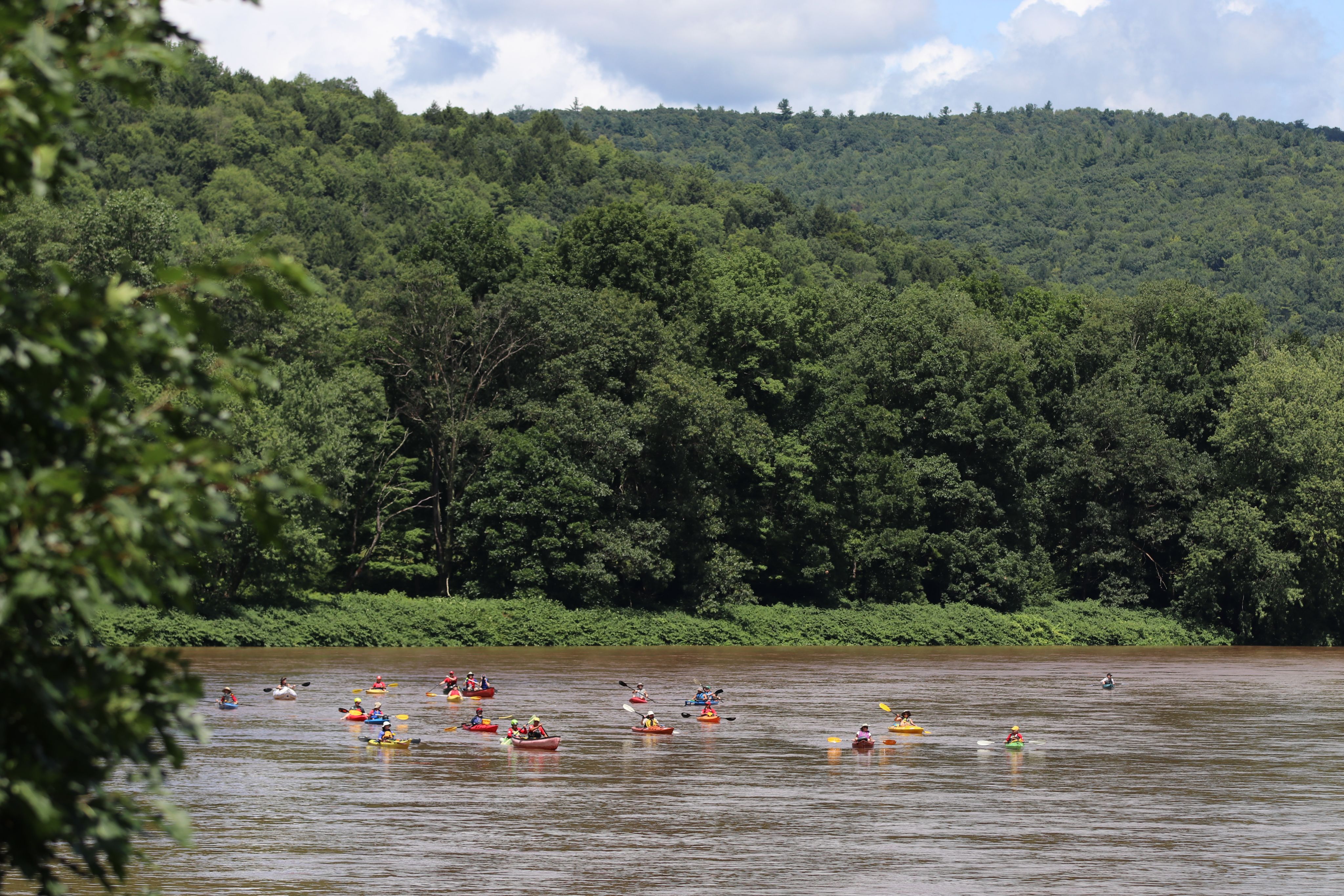
Every four years since 2002, our nation paddles the Delaware River top to bottom from Hancock, NY to Cape May, NJ for the Rising Nation River Journey. We stop along the way to host public educational programs and signings of the Treaty of Renewed Friendship, an agreement that acknowledges the Lenape people and commits to environmental stewardship. When we get down to Philly, we always have one or two days of big events. A couple of years ago, we actually had a large treaty-signing at Temple; it was really great. Our next River Journey is coming up in 2026 if anyone wants to join us.
They can come right to us. Our website is lenape-nation.org. We welcome anyone who has an interest. It’s important to understand we are not the only Lenape nation out there. There are Lenape Communities in New Jersey, Delaware, Kansas, Wisconsin, Oklahoma, Idaho, and Canada. But if people are interested in talking with the Lenape Nation of Pennsylvania, they should get in touch with us.
I love working with students. I’ve been on thesis advisory boards, but also a lot of students have come to me asking, “What do you think about this? Am I doing this right?” I’m always happy to help with that kind of thing. Faculty or administrators who want to work on curriculum development, exhibits, anything like that. Of course, it’s not limited to that, but if they express those kinds of interests, they will hear back from me.
For anyone else, if they just have questions, want to learn more about our people or want to host a program at a community site, it just starts with getting in touch and working with our people. We’ll start that conversation.

 Built with Shorthand